
Impossible Objects
Composite Based Additive Manufacturing — high-speed production of end-use composite parts
www.impossible-objects.com

From the Manufacturer
The World's Fastest 3D Printer — CBAM 25
Capable of print speeds 15x faster than the nearest competitor, the CBAM 25 has and will change the way things are made by bringing the power of 3D printing to volume manufacturing.
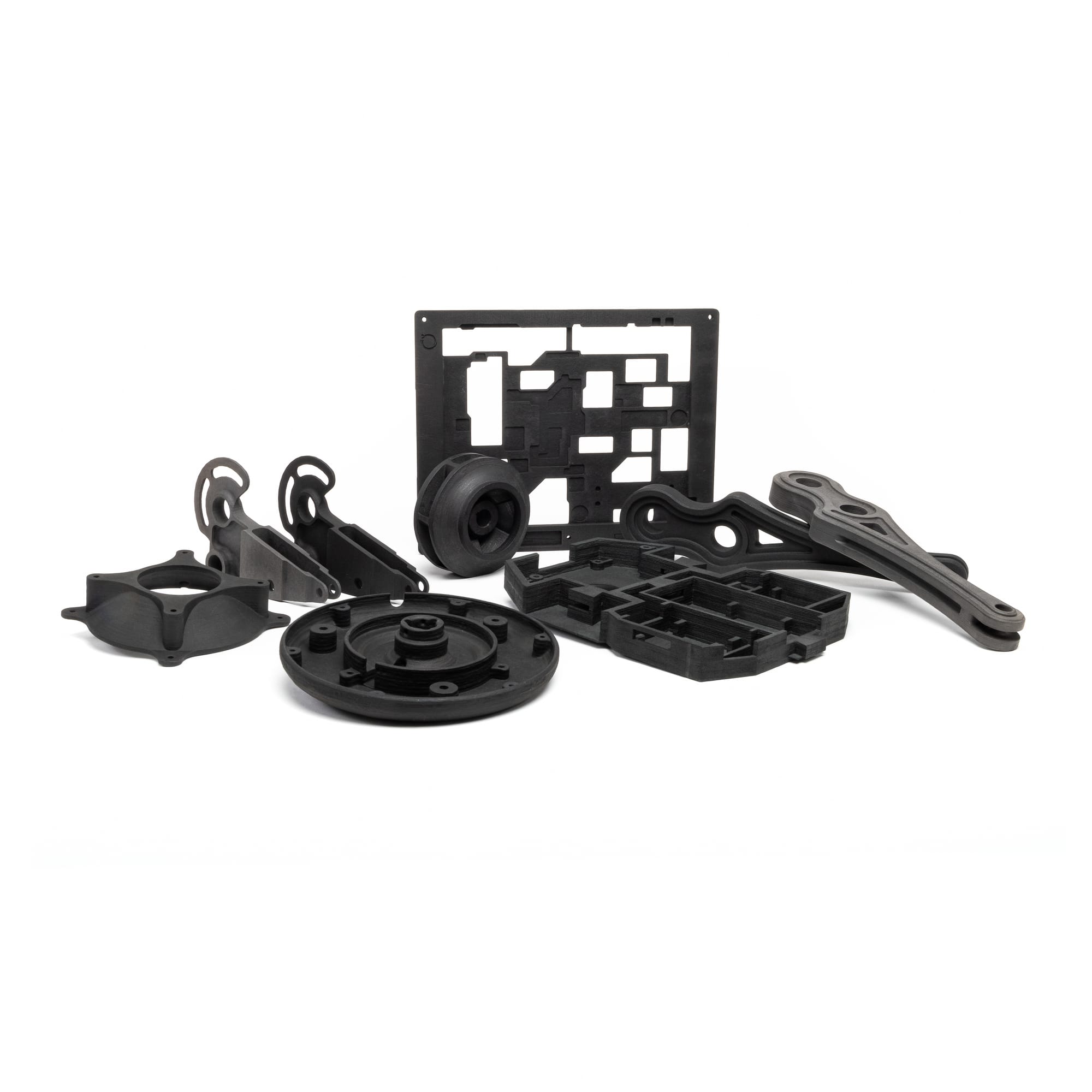
CBAM or Composite Based Additive Manufacturing uses high-speed printing methods to produce high-performance composite parts without tooling or messy resins. Long-fiber sheets of carbon fiber or fiberglass are combined with PEEK and other high-performance polymer powders. Once the excess polymer powder is vacuumed from each individual sheet, they are stacked in the shape of the CAD bitmap file. The stack is then heated and compressed, and the un-bonded portions are removed through automated bead blasting.
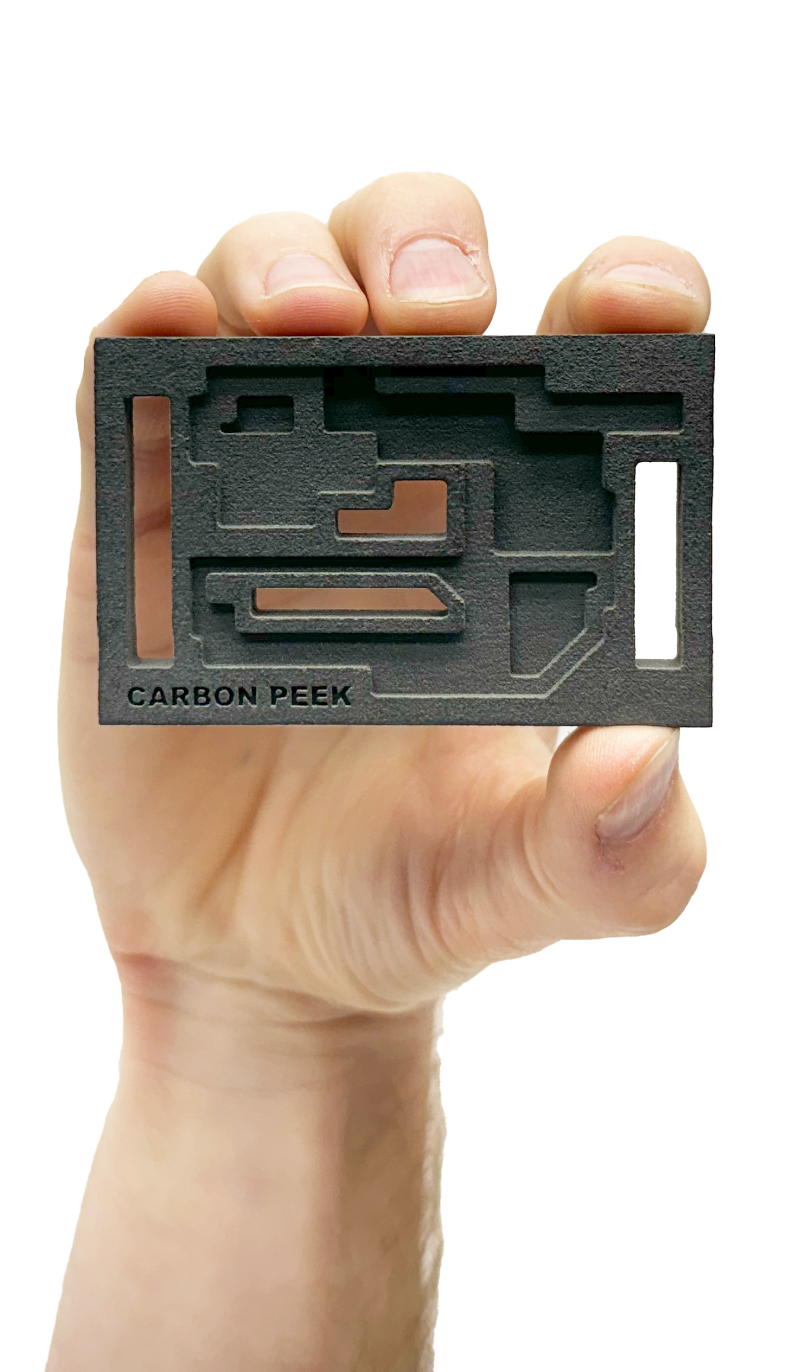
What is left is an advanced composite part with an excellent strength-to-weight ratio compared to aluminum. A sample part now prints in just 10 seconds, demonstrating the production speed that makes CBAM viable for volume manufacturing.
CBAM 25 — Technical Specifications

| Specification | Data |
|---|---|
| Technology | Composite Based Additive Manufacturing (CBAM) |
| Max Build Volume | 18 × 17.7 × 4 inches (457 × 449 × 101 mm) |
| Production Speed | 10,000 cm³/hr raw · 2,968 cm³/hr real-world |
| Print Speed | 25 feet per minute |
| Sheet Substrate | Carbon Fiber or Fiberglass |
| Polymer Powders | PEEK and Nylon 12 |
| Layer Thickness | 50 microns |
| Print Accuracy | 100 microns (up to, with reprint) |
| Minimum Wall Thickness | 2mm |
| Printer Dimensions | 20 × 5 × 5 feet |
| Post-Processing | Heating, Pressing & Auto/Manual Support Removal |
| Power Requirements | 220V / 2 Phase 30 Amp |
| Operating Temperature | 70°F / 80% relative humidity |
| Certification | UL 94V-0 |
TCT Buyer Guidance
Questions for your Impossible Objects CBAM evaluation
Does your application require the strength-to-weight ratio of continuous-fibre composites? CBAM produces true composite parts using long carbon fibre or fiberglass, which are mechanically distinct from chopped-fibre filled polymers that are typically used in AM.
What volume are you targeting? CBAM's speed advantage is most significant at higher volumes where conventional AM processes become cost-prohibitive. At lower volumes, the post-processing steps (pressing, bead blasting) may add cycle time that offsets the raw print speed.
Do you currently use tooled composite manufacturing? CBAM eliminates tooling entirely, which can dramatically reduce lead times and enable design iteration at a pace that tooled processes cannot match.