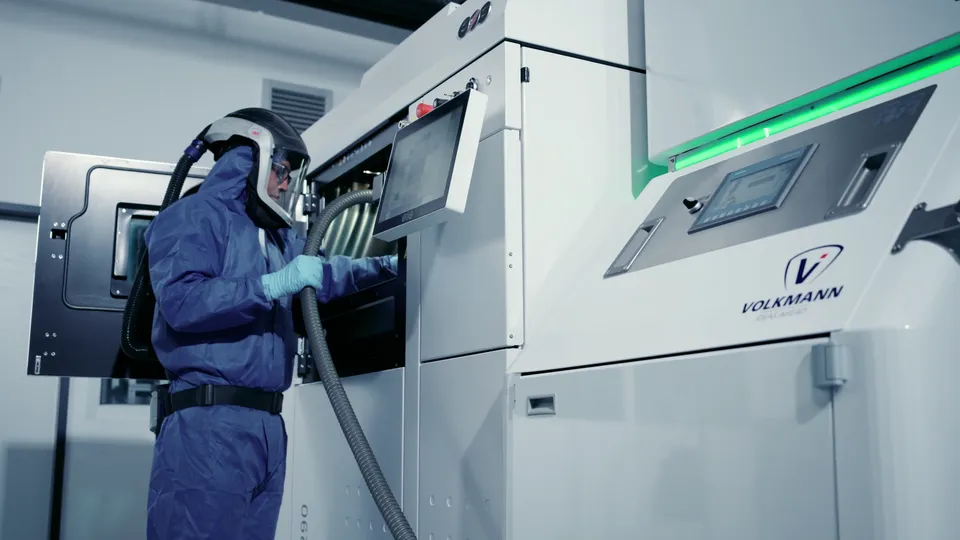
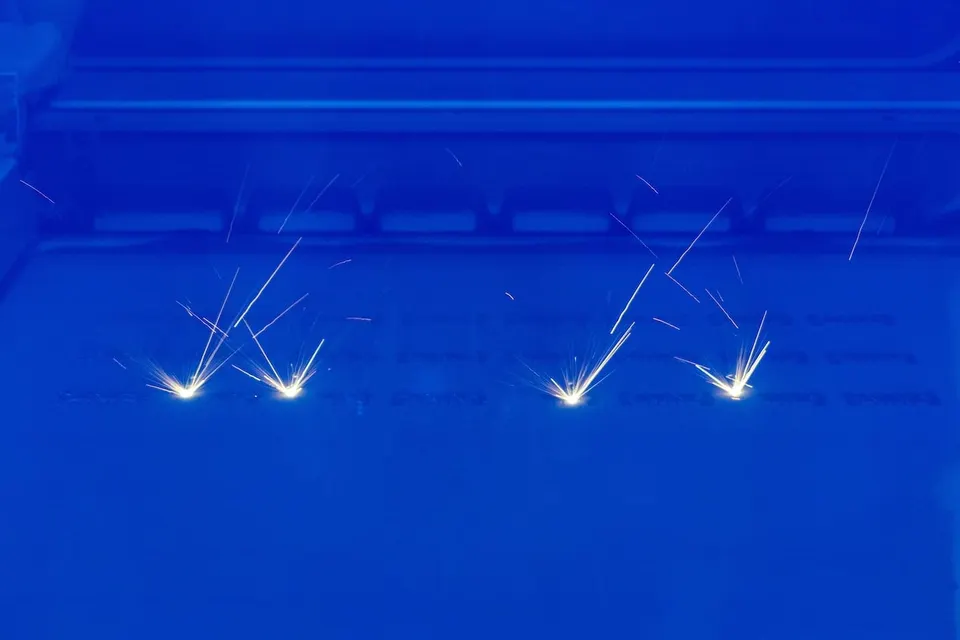
Meltio’s Directed Energy Deposition (DED) technology provides a versatile framework for heavy industry, aerospace, and energy sectors to integrate metal additive manufacturing into existing workflows. Rather than forcing a rigid platform, the Meltio Engine Integration kit for Industrial Robots allows manufacturers to convert standard robotic arms into high-precision 3D printing systems for part production and component repair.
A primary example is Eurobearings, which utilized this flexibility to mount a Meltio head onto a mobile robotic arm within a containerized Robot Cell, enabling on-site fabrication and repair of large-scale industrial components.
Metal additive manufacturing solutions are no longer limited to reliably producing metal parts from various materials. Industrial factories demand more. Production lines in the automotive, aerospace, mining, oil and gas, energy, and defense industries require metal additive manufacturing solutions that can adapt to their needs. This is what is known as “customization”—not only to manufacture 3D metal parts more efficiently than with slower, more expensive conventional techniques, but also to repair existing parts. Meltio’s industrial solutions can be tailored to each customer’s needs, as is the case with Eurobearings for the heavy industry sector in Italy.
Eurobearings use case
Heavy industry relies entirely on massive rotating equipment. When turbines or cement mills stop operating, the financial loss is immediate and severe. Eurobearings has spent nearly thirty years designing and manufacturing critical bearing systems for global original equipment manufacturers. Based in Cortemaggiore, Italy, they specialize in white metal sliding, thrust, and combined bearings. The sheer size of these specialized bearings creates significant engineering bottlenecks.
The engineering team designed a high-capacity robotic cell centered around a massive KUKA industrial robot. To break free from conventional printing volume limits, they mounted the robot on a mobile walkway or gantry. This mobility grants the robot an expanded working envelope, allowing Eurobearings to strategically position the deposition head to accommodate a wide variety of part sizes and geometries. The setup entirely removes traditional size constraints for manufacturing complex oversized industrial parts.
Historically, manufacturing these parts required casting or machining from solid metal blocks. This subtractive approach generated immense material waste, sometimes reaching up to 80 percent of the initial raw material. Furthermore, these traditional methods imposed severe limits on delivery times and material efficiency for heavy duty parts. Heavy industry relies entirely on massive rotating equipment. When turbines or cement mills stop operating, the financial loss is immediate and severe. Eurobearings has spent nearly thirty years designing and manufacturing critical bearing systems for global original equipment manufacturers. Based in Cortemaggiore, Italy, they specialize in white metal sliding, thrust, and combined bearings. The sheer size of these specialized bearings creates significant engineering bottlenecks.
“We’ve moved from the limits in lead times and material waste that often traditional manufacturing presents, to being able to manufacture and repair large-scale components quicker and more efficiently than before," said from Eurobearings engineering team.
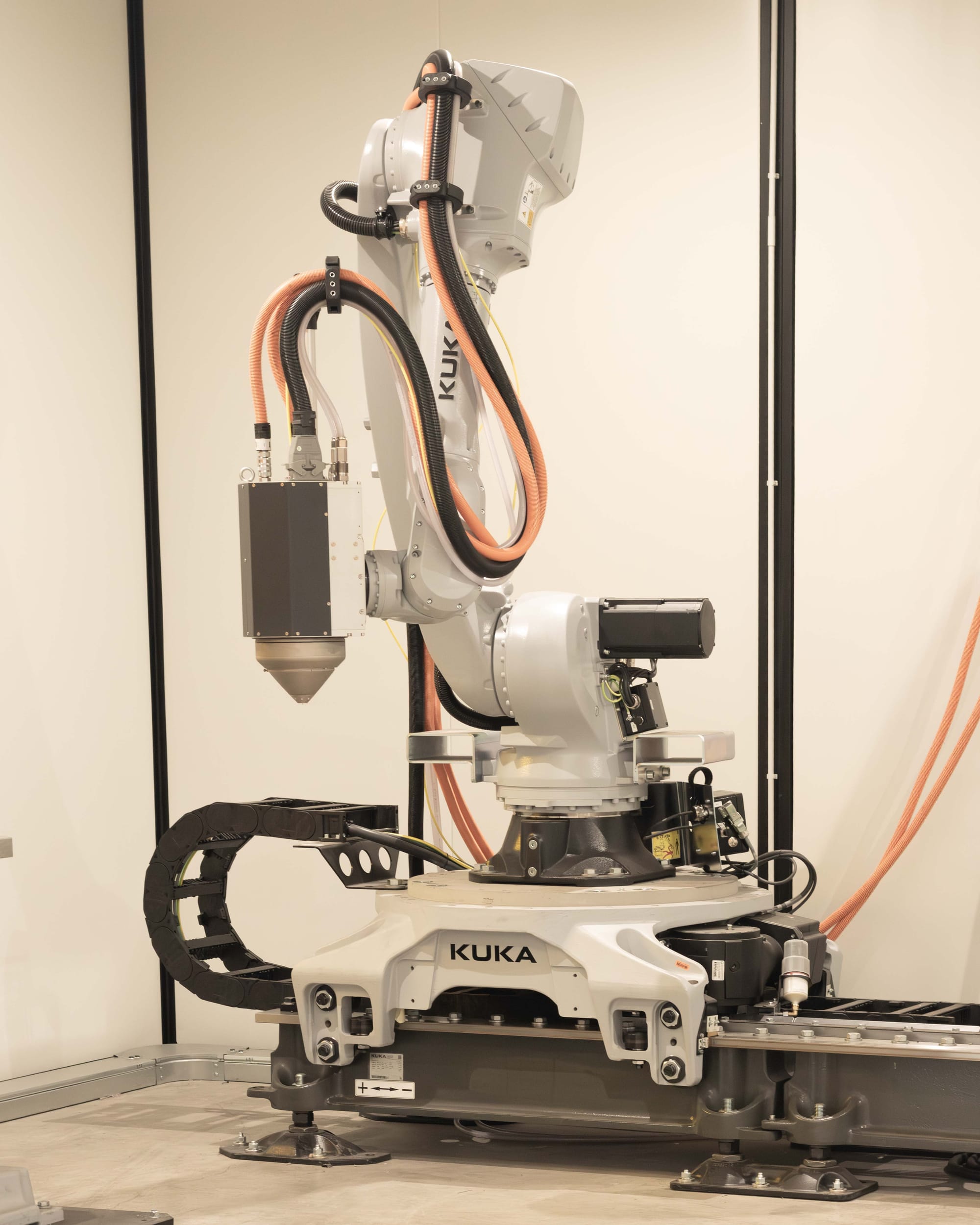
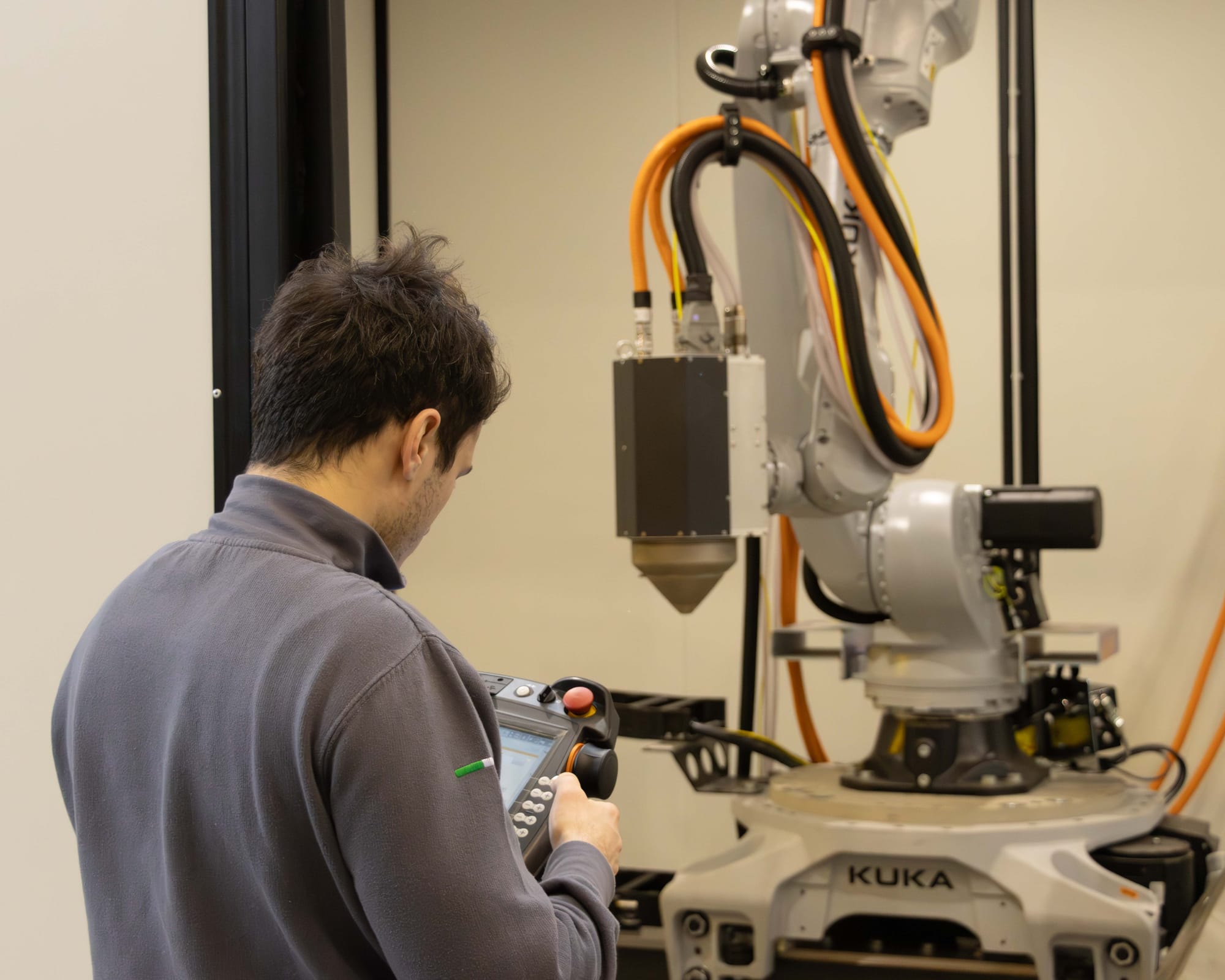
To eliminate these production bottlenecks, Eurobearings successfully integrated the Meltio Engine Robot Integration into their Italian production facility. This strategic shift allows them to utilize advanced Directed Energy Deposition technology to apply white metal, commonly known as babbitt, alongside various other metal alloys.
Meltio is one of the young but increasingly present providers in the field of metal-based additive manufacturing. Founded in 2019, the company from Linares in southern Spain relies on a wire-based laser deposition welding process and thus pursues an approach that is specifically geared towards industrial operating conditions. The focus is less on experimental applications and more on robust, reproducible processes for use in real production environments.
The focus here is clearly on integration into existing production environments rather than the development of stand-alone solutions. Meltio not only develops stand-alone metal 3D printing systems, but also specifically addresses hybrid manufacturing scenarios, for example by integrating them into CNCmachines or robot-supported systems. The company is thus following an industry trend in which additive processes are increasingly being considered as part of existing production chains.
Like many players in metal 3D printing, Meltio is also facing the challenge of driving the transition from technological feasibility to broad industrial application. The key question here is not so much what possibilities the technology offers, but rather under what conditions it can be used reliably, scalably and economically - a change in perspective that is currently shaping the development of the entire industry.
“Our priority for 2026 is clearly defined: industrial scaling. The industry is increasingly moving beyond the phase of pure technology validation. The key question today is no longer what is possible, but what works reliably under real production conditions. At Meltio, we focus on three key areas: Firstly, scaling up specific applications, particularly in the areas of repair, manufacturing and large-format components. Secondly, the integration of additive processes into existing industrial systems such as CNC machines and robotics solutions. And thirdly, building a global ecosystem that enables local implementation and support of the technology. “, stated Meltio Managing Director, José Luis Sánchez.
“With over 650 systems installed in more than 45 countries, we are observing a clear pattern: additive manufacturing is introduced when there is measurable operational added value. The industry is not lacking in technology, but in industrialization - and this is precisely where the next development phase will be decided.”
Three developments will significantly shape the next phase of metal additive manufacturing.
Firstly, a pragmatic approach to materials. Materials that are available, cost-efficient and easy to handle on an industrial scale will be crucial.
Secondly, progress in process control and certification. Industrial applications require reproducible results, comprehensive monitoring and certifiable processes - not experimental approaches. Thirdly, integration at system level. Additive manufacturing will not prevail as an isolated solution, but as an integral part of networked production systems. The direction is clear: additive manufacturing will not replace conventional processes, but will define where their efficiency limits are reached. Successful companies will not be those that have the most technologically complex systems, but those that enable reliable industrial implementation on a large scale.